Handcrafted marcasite jewelry is admired worldwide for its intricate details, refined metalwork, and distinctive vintage charm. While modern manufacturing has introduced machine-set methods, true marcasite enthusiasts know that nothing compares to the artistry of pieces made by hand. Every stone, every curve, and every pattern crafted manually reflects the skill and dedication of the artisan behind the work. In this chapter, we explore the traditional techniques used to create handcrafted marcasite jewelry, the tools involved, the precision required, and the craftsmanship secrets that make each piece truly one of a kind. Jewelry wholesale thail and
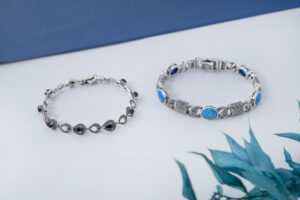
The Beauty of Handcrafted Marcasite Jewelry
Handcrafted jewelry holds a unique value that machine-made pieces cannot replicate.
Why handcrafted marcasite jewelry stands apart:
- Each piece is formed with artistry—not mass-produced repetition.
- Artisans individually set each marcasite stone.
- The metalwork reflects traditional craftsmanship.
- Variations in texture and placement add character.
These qualities give handcrafted jewelry a soul—something deeply appreciated by collectors.
The Tools Behind the Craft
Crafting marcasite jewelry by hand requires specialized tools that allow artisans to work with micro-level precision.
Essential tools include:
1. Jeweler’s Gravers
Used to carve and shape metal settings.
2. Micro Tweezers
Required for picking up tiny marcasite stones, often only a few millimeters in size.
3. Beading Tools
Shape metal into tiny beads to secure stones.
4. Hand Files and Buffers
Smooth and refine the silver surface.
5. Magnification Systems
Help artisans examine small details with clarity.
These tools allow the creation of delicate, detailed patterns characteristic of marcasite jewelry.
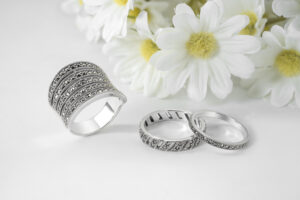
The Process of Crafting Handcrafted Marcasite Jewelry
Creating a single handcrafted piece can take many hours, depending on complexity.
Step 1: Designing the Jewelry
The process begins with a detailed design sketch.
- Artisans draw intricate patterns inspired by vintage motifs.
- They plan stone placement for balance and symmetry.
- Metal thickness, curves, and settings are determined.
Design is crucial because marcasite works best with structured, symmetrical patterns.
Step 2: Forming the Silver Base
Silver—usually 925 sterling—is shaped into the jewelry base.
Techniques include:
- Sawing and cutting silver sheets
- Hand-forging shapes
- Carving out patterns for stone placement
The quality of silverwork directly affects the beauty and durability of the piece.
Step 3: Carving the Settings
Marcasite stones are tiny and require precise settings.
Artisans carve:
- Bezel seats
- Prong structures
- Tiny engraved cells (for bead setting)
This step demands steady hands and years of experience.
Step 4: Selecting Marcasite Stones
Marcasite stones vary in:
- Size
- Shape
- Shine
- Cut quality
Artisans choose stones that match the design in both color and reflection.
Step 5: Hand-Setting Marcasite Stones
This is the heart of handcrafted marcasite jewelry.
The process:
- A tiny amount of metal is raised to hold the stone.
- The stone is placed using micro tweezers.
- The metal is pushed back over the edge to secure the stone.
- The surface is polished while ensuring the stone remains tight.
Why this matters:
- Machine settings lack the precision and charm of hand-set stones.
- Hand-setting allows deeper sparkle and better alignment.
Each marcasite stone is individually secured—often hundreds in a single piece.
Step 6: Adding Milgrain Detailing
Milgrain is the tiny beaded edging often seen around marcasite designs.
Handmade milgrain requires:
- Rolling a beading tool along the metal surface
- Even pressure and perfect rhythm
Milgrain adds vintage elegance and enhances texture.
Step 7: Polishing and Finishing
Once stones are set, the piece is polished.
Techniques include:
- Hand polishing for delicate areas
- Machine polishing for larger surfaces
- Oxidation to deepen shadows and antique character
A good finish makes the marcasite sparkle more intensely.
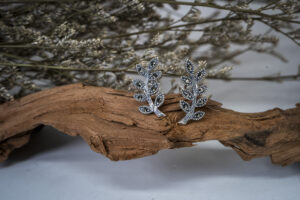
Unique Techniques Used in Handcrafted Marcasite Jewelry
Different artisans employ their own signature methods, but several classic techniques are widely practiced.
1. Bead Setting
Marcasite stones are secured with tiny beads of metal.
- Enhances sparkle
- Creates a textured look
2. Flush Setting
Stones sit level with the metal surface.
- Offers a sleek, modern look
- Requires extremely precise drilling
3. Cluster Setting
Multiple stones are grouped together.
- Common in floral or vintage patterns
- Adds dramatic shimmer
4. Pavé Setting
Stones are placed closely together with minimal metal visibility.
- Creates a “continuous sparkle” effect
These techniques give handcrafted marcasite jewelry its signature brilliance.
The Importance of Artisan Skill
Handcrafted marcasite jewelry is only as good as the artisan who creates it.
Skilled artisans must master:
- Stone-setting precision
- Symmetry and geometric balance
- Knowledge of vintage motifs
- Control of micro tools
- Understanding of silver’s behavior
Years of training are required to achieve flawless craftsmanship.
Challenges in Creating Handcrafted Marcasite Jewelry
The process is intricate and demanding.
Challenges include:
- Stone fragility—marcasite can crumble if handled poorly
- Tiny size makes stones difficult to pick up
- Misalignment can ruin the entire design
- Each setting must be symmetrical
Despite these challenges, artisans continue to keep the tradition alive.
Why Handcrafted Marcasite Jewelry Is Highly Valued
Collectors and enthusiasts appreciate handcrafted pieces for their:
- Authentic artistry
- Timeless beauty
- Superior durability
- Unique character
- Historical craftsmanship traditions
Machine-made marcasite jewelry simply cannot replicate the soul of handcrafted work.
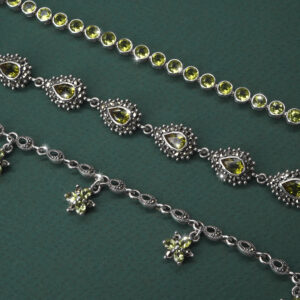
How Handcrafted Techniques Influence Modern Designs
Even today, many high-end marcasite brands maintain traditional hand-setting methods.
Modern influence includes:
- Vintage-inspired floral patterns
- Art Deco geometric structures
- Edwardian filigree designs
- Romantic Victorian motifs
These techniques ensure marcasite jewelry retains its historical charm.
Conclusion
Handcrafted marcasite jewelry represents a fusion of history, precision, and artistic mastery. From delicate milgrain to hand-set stones, every detail tells a story of skilled craftsmanship. The time-intensive techniques behind each piece make handcrafted marcasite not just jewelry, but wearable art enriched with heritage and emotion.
In the next chapter, we will explore marcasite stone cutting and faceting, revealing how the unique sparkle of marcasite is achieved through traditional gem-cutting techniques.